Skincare
Niacinamide vs Vitamin C: Which to Use, When, and Can You Use Them Together?
Sadiq · 27 September 2026
Niacinamide or vitamin C? A simple guide to which suits your skin, how to use both together, and what heat, humidity and storage mean for results.
Niacinamide vs vitamin C comes down to your main goal. Niacinamide is usually the easier first pick if your skin feels oily, uneven in texture, or easily irritated. Vitamin C usually makes more sense if dull-looking tone is your main concern and your skin barrier feels steady. Yes, you can use them together. Many people apply vitamin C in the morning under sunscreen and niacinamide at night, or layer both once their skin is used to each one. Start with one, give it several weeks, then add the other.
What each ingredient is known for
Niacinamide
Niacinamide is a form of vitamin B3. You will find it in serums, moisturizers, and toners. People reach for it when they want a more balanced feel in oily areas, a calmer-looking surface, and a more even-looking finish over time.
It tends to fit easily into most routines and is often seen as beginner-friendly. It is also less fussy about storage than many vitamin C formulas.
Vitamin C
Vitamin C appears in skincare as pure ascorbic acid or as gentler derivatives. It is mostly linked with a brighter-looking complexion and with antioxidant support as part of a daytime routine.
- Ascorbic acid: potent, but sensitive to light, air, and heat. It can sting some people.
- Derivatives: usually milder and more stable, with a slower, gentler feel.
Neither ingredient cures any condition, and neither replaces sunscreen. Think of them as two tools with different strengths.
Niacinamide vs vitamin C: side-by-side
Main goal
- Lean niacinamide first: Oily T-zone, uneven texture, a steady low-fuss routine
- Lean vitamin C first: Dull-looking tone, brightness, a daytime antioxidant habit
Climate
- Lean niacinamide first: Hot, humid, sticky days
- Lean vitamin C first: Lots of sun and outdoor time, city pollution
Barrier comfort
- Lean niacinamide first: Skin feels reactive or easily upset
- Lean vitamin C first: Barrier feels stable and comfortable
Storage
- Lean niacinamide first: Generally forgiving
- Lean vitamin C first: Ascorbic acid needs opaque, airtight packaging
Layering
- Lean niacinamide first: Pairs easily with most basics
- Lean vitamin C first: Can sting; space it from strong acids and retinoids at first
These are patterns, not rules. How your own skin responds matters more than any trend.
A quick decision checklist
Answer these before you buy:
1. Is shine, visible pores, or uneven texture your biggest bother? Start with niacinamide. 2. Is dull-looking tone your main concern, and does your skin feel calm? Start with vitamin C, ideally a milder form if you are new to it. 3. Does your skin sting, feel tight, or flake after cleansing? Repair the basics first with a gentle cleanser, moisturizer, and sunscreen, then try niacinamide. 4. Are you already using a retinoid or strong exfoliating acids? Add only one new product, and introduce it slowly. 5. Are you unsure what is driving your concerns? Check your skin signals before buying another serum.
If uneven-looking spots are your main concern, read why you get dark spots and what actually helps them fade before you choose. Both ingredients can be part of a routine for a more even-looking tone, but daily sunscreen and patience matter just as much.
Not sure what your skin needs? Try Sipaara's free AI skin scan. Take a selfie to see your skin's key signals across 30+ metrics, and unlock the full report if you want more detail.
Can you use niacinamide and vitamin C together?
Yes. Many routines include both. The main question is timing, not whether they are allowed together. If your skin is still adjusting, separating them is the gentler route.
Common patterns:
- Split routine: vitamin C in the morning, then moisturizer and sunscreen. Niacinamide at night, then moisturizer.
- Layered routine: once each one feels comfortable on its own, apply the thinner texture first and let it absorb before the next layer.
- Easy-going routine: niacinamide daily, vitamin C on a few mornings a week.
For the full morning and evening order, see our guide to the correct skincare layering order.
When to use each
- Morning: vitamin C fits well here, always followed by sunscreen.
- Morning or night: niacinamide works at either time, so place it wherever your routine has room.
- Every morning: sunscreen is the step that protects whatever else you use.
How skin type and climate change the answer
Oily or combination skin in warm weather: Lightweight niacinamide serums or gel textures usually feel best. Heavy creams can feel greasy by midday.
Dry skin in cold or air-conditioned environments: Either ingredient can work, but pair it with a richer moisturizer. If your skin feels tight rather than dry, it may be dehydration. Learn the difference between dry skin and dehydrated skin.
Medium to deep skin tones: Uneven-looking tone and marks that linger after breakouts are common concerns. Be gentle, because irritation from over-stacking actives can leave marks that look worse. Introduce one active at a time.
Fair or light skin tones prone to redness: Start with lower-strength products and watch for flushing or stinging, especially with ascorbic acid.
The India climate section: heat, humidity, and monsoon
India's climate changes which ingredient feels right through the year.
- Hot, humid months: Many people prefer niacinamide in a light serum when the face looks shiny by afternoon. A heavy vitamin C cream can feel sticky. A light vitamin C serum under a gel moisturizer may suit you better.
- Strong sun: If you use vitamin C, keep it under sunscreen in the morning. Sunscreen is never optional.
- Monsoon: Use fewer layers. One well-chosen active beats stacking two strong ones.
- Storage in the heat: Keep vitamin C away from sunny windowsills and steamy bathrooms. If the serum darkens noticeably, it has likely oxidized.
Our in-stock pick, and what to look for in vitamin C
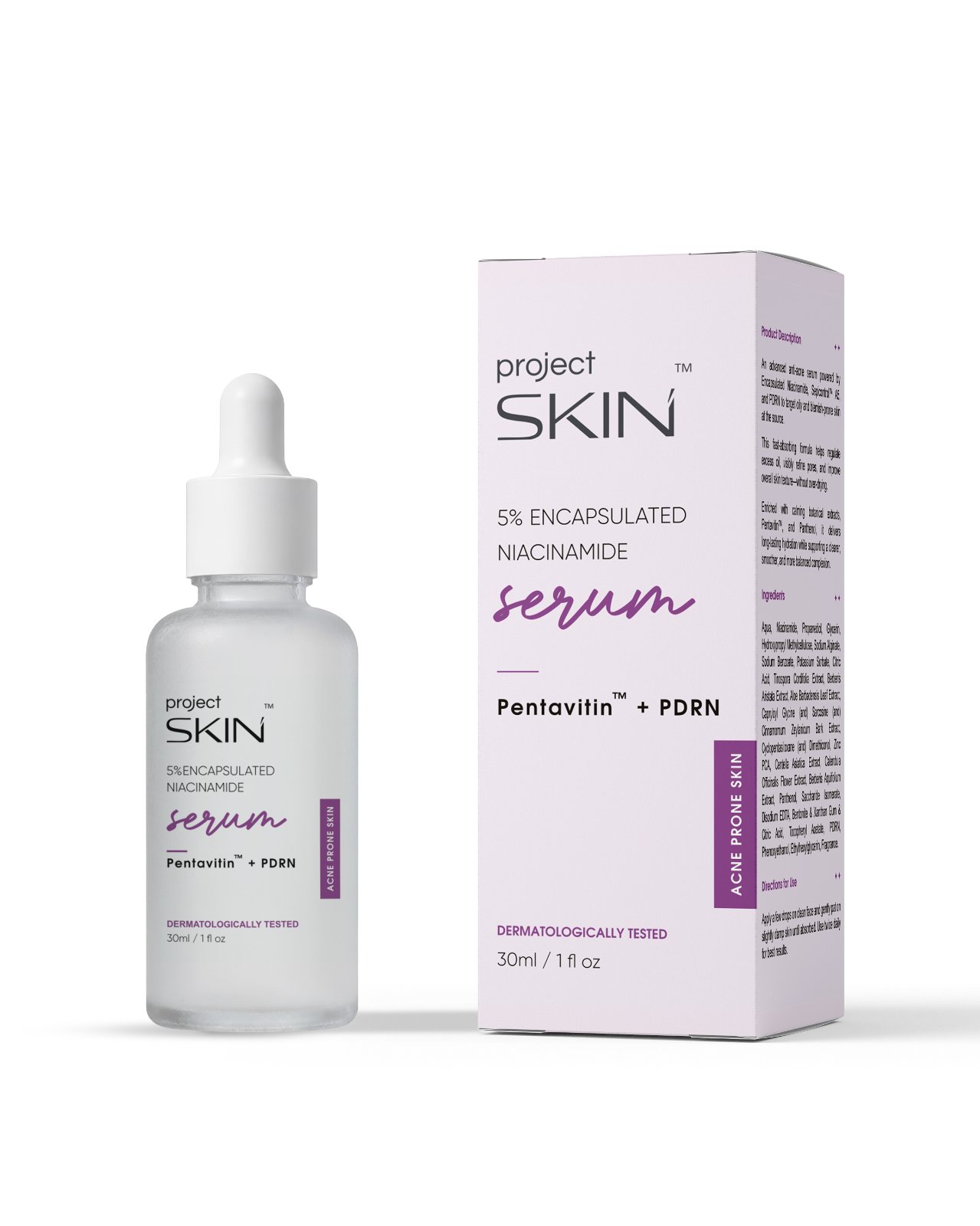
If niacinamide is your starting point, the 5% Encapsulated Niacinamide Serum with PDRN from Project Skin is on Sipaara. From its product page:
- 5% encapsulated niacinamide with PDRN
- Lists Sepicontrolâ„¢ A5, Pentavitinâ„¢, and panthenol
- Described as a fast-absorbing serum and dermatologically tested
- Listed for oily and sensitive skin types
- 50 g, shelf life of 24 months
- Directions: apply a few drops to a clean face, pat onto slightly damp skin until absorbed, and use twice daily
View the 5% Encapsulated Niacinamide Serum with PDRN.
We do not currently stock a vitamin C serum. If you buy one elsewhere, look for:
- A stable form, or a derivative if you are new to vitamin C
- Opaque, airtight packaging, such as a pump or a tinted bottle
- A short ingredient list without heavy fragrance if your skin is reactive
Common mistakes to avoid
- Starting both on the same day. If something irritates you, you will not know which caused it.
- Skipping sunscreen. Brightening steps make little sense without daily protection.
- Expecting results in a week. Visible changes, when they happen, take weeks.
- Chasing the highest percentage. Higher strength often means more irritation, not better results.
- Storing vitamin C badly. Heat and light can break it down early.
- Over-stacking actives. Too many serums can upset your barrier. Learn the signs of a damaged skin barrier.
- Skipping the patch test. Try a new product on a small area for a few days first.
When to see a dermatologist
This guide covers cosmetic skincare only. See a dermatologist if you notice:
- Patches or spots that are painful
- Discoloration or a rash that is spreading
- Breakouts or marks that are scarring
- Concerns around the eye area
- No change in 6-8 weeks of consistent, gentle use
Also check with a qualified professional before adding actives if you are pregnant, have a diagnosed skin condition, or use prescription skincare.
Frequently asked questions
Can I use niacinamide and vitamin C together?
Yes, many people do. If your skin is new to either one, start by splitting them, using vitamin C in the morning and niacinamide at night. Once both feel comfortable, you can layer them in the same routine. Stop and simplify if you notice stinging, lasting redness, or tightness after applying them.
Which is better for dark spots, niacinamide or vitamin C?
Neither cures dark spots. Both appear in routines aimed at a more even-looking tone, and many people use one or both. Your choice depends on comfort. Niacinamide is often gentler, while vitamin C suits stable skin. Daily sunscreen matters as much as either ingredient, and results take several weeks to show.
Should I use vitamin C in the morning or at night?
Many people prefer vitamin C in the morning, under moisturizer and sunscreen, as part of a daytime routine. You can use it at night if mornings feel rushed or if it stings under makeup. Whichever time you choose, be consistent, and never treat vitamin C as a replacement for sunscreen.
How long until I see results?
Give any new product at least several weeks of steady use before judging it. Texture and tone changes, when they happen, are gradual. If you see no change after 6-8 weeks, or your skin feels worse, rethink the product or speak with a dermatologist instead of adding more actives.
Choose the active your skin actually needs
Niacinamide and vitamin C are not rivals. Start with the one that matches your main goal, add the other later if you want, and protect your progress with daily sunscreen.
Not sure what your skin needs? Try Sipaara's free AI skin scan. Take a selfie to see your skin's key signals, and unlock the full report if you want more detail.
Shop related products
You may also like

Skincare
How to Take a Photo for AI Skin Analysis: Lighting, Angle, Camera and Makeup
Learn how to take a selfie for an accurate AI skin scan, from lighting and angle to camera settings and makeup.

Skincare
Pimples After Makeup? Why Garba Nights Cause Breakouts and What to Do Mid-Navratri
Night 2 of garba and new bumps this morning? Work out whether it's makeup, sweat, friction or a reaction, and change a few small things tonight so you can keep dancing.

Skincare
How to Shop Skincare by Skin Type During India's Festive Sales (Not by the Discount)
Big Billion Days opens today. Here's how to fill your skincare cart by your skin type, not the discount banner, before Navratri starts on Sunday.