Routines
5-Step Monsoon Skincare Routine for Humidity and Breakouts (India)
Sadiq · 27 September 2026
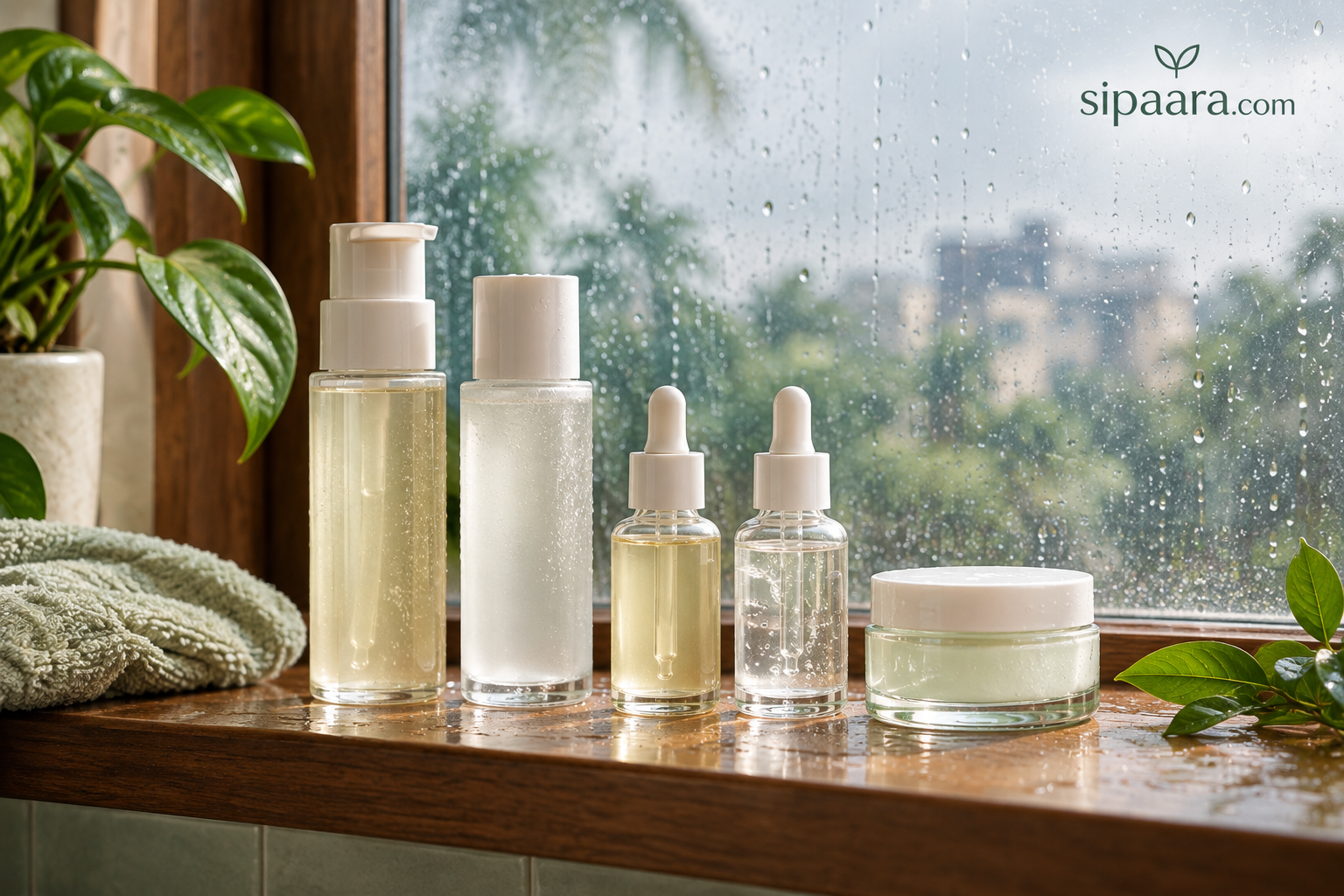
Monsoon humidity making skin sticky or breakout-prone? A clear 5-step Indian routine — light layers, smart cleansing, sunscreen — without 10-step hype.
"## Full article
Monsoon in India is beautiful outdoors and chaotic on the bathroom shelf. Humidity climbs, sweat sits longer, umbrellas drip, and suddenly every serum feels like one too many. Breakouts, clogged-looking pores and a sticky finish are common complaints — and the usual response is to add more products.
This guide does the opposite. It offers a clear 5-step monsoon routine built for humidity and breakout-prone feel. No 10-step ritual. No medical claims. Just climate-smart habits you can actually keep on a rainy Tuesday in Pune, Kochi or Kolkata.
Why monsoon skin feels different
High humidity means moisture in the air. Your skin may already feel damp before you apply cream. Combine that with:
- Sweat trapped under masks, helmets or dense traffic pollution
- Rich winter creams that never got put away
- Phone screens and pillowcases holding damp-season residue
- Fewer sun hours but still meaningful UV on bright monsoon days
…and the face can look shiny, congested or dull even when you are “doing everything.”
Breakouts in the rains are often linked to clogged-feeling pores, leftover oil + sweat, and heavy textures — not a personal failure. If you have painful cysts, sudden severe rashes, or signs of infection, see a dermatologist. This article covers everyday cosmetic care only.
The monsoon rule: fewer layers, lighter textures
Before the steps, one principle:
If a product leaves a film that never sinks in, it is working against humidity — not with it.
Prefer gels, lotions and fluid serums. Save thick balms for lips, cuticles or truly dry patches. Wait 30–60 seconds between steps so you do not mix wet layers into a sticky coat.
Your 5-step monsoon routine
Step 1 — Cleanse (gently, and once more when needed)
Goal: Remove sweat, sunscreen, dust and leftover oil without stripping.
In monsoon, a single harsh foaming wash twice a day can leave the barrier uncomfortable while oil returns by afternoon. Aim for clean, not squeaky.
- Morning: lukewarm water or a mild cleanser if you woke up oily.
- Night: cleanse properly. On heavy pollution or makeup days, a light first cleanse (micellar water or oil cleanser) followed by a gentle face wash helps.
- After heavy rain + sweat (commute, gym): rinse or cleanse sooner rather than hours later.
Skip for monsoon: daily physical scrubs, charcoal “detox” masks every other night, and anything that leaves your face burning.
Step 2 — Treat (one focused leave-on, optional)
Goal: Address one concern — oil balance, mild congestion feel, or barrier calm — without stacking five actives.
Humidity is the wrong season to debut three strong acids at once. Pick one leave-on if you use actives at all:
- Niacinamide (lightweight serum): popular when oil and uneven texture are the story.
- Salicylic acid (BHA) a few evenings a week: often discussed for congested T-zones — introduce slowly; not every face needs it nightly.
- Barrier helpers (panthenol, ceramides, centella in light textures): when skin feels reactive from over-cleansing.
If your skin is calm and you only want moisture + SPF, you can skip a separate “treat” step. Empty space in a routine is allowed.
Patch-test new products. Stop if stinging or irritation persists. Cosmetics do not treat medical acne subtypes; clinical care is different from a monsoon tidy-up.
Step 3 — Moisturise (yes, still — but lighter)
Goal: Support the barrier so skin does not overcompensate with oil after cleansing.
Skipping moisturiser because it is humid is a common mistake. Dehydrated-feeling skin can still look shiny. Choose:
- Gel or gel-cream textures
- Humectants like glycerin or hyaluronic acid in water-light bases
- Non-greasy finishes that set in a minute
Apply a thin layer on damp skin. If your cheeks are comfortable but the T-zone pills, use less in the centre of the face.
Step 4 — Sunscreen (daytime, non-negotiable)
Goal: Daily UV protection even when the sky is grey.
Monsoon clouds do not cancel UV. A lightweight, non-whitening fluid or gel SPF that you will actually reapply beats a thick cream you abandon by 11 a.m.
- Apply as the last leave-on step in the morning.
- Reapply if you are outdoors a long time or after heavy sweating (practical reapplication beats perfect theory).
- Pair with a hat or umbrella for long outdoor stretches — skincare and behaviour work together.
Sunscreen is not a medicine for disease; it is everyday protection and a core part of climate-smart care in India.
Step 5 — Night reset (short and consistent)
Goal: End the day clean and lightly supported so humidity + pillow contact do not sit on yesterday’s grime.
Keep night simple:
1. Cleanse (Step 1) 2. Optional treat (Step 2) 3. Light moisturiser (Step 3)
No need for sleeping masks every night in peak humidity. Weekly, you might use a clay or gentle purifying mask once if your T-zone feels congested — not as a replacement for sleep, diet basics or medical care.
Change pillowcases more often in monsoon. Wipe your phone. These habits matter as much as the fifth bottle on your shelf.
Sample day map (so it stays under five steps)
Morning 1. Cleanse (or rinse) → 2. Optional light serum → 3. Gel moisturiser → 4. Sunscreen
Night 1. Cleanse → 2. Optional treat → 3. Gel moisturiser
That is the same five-step logic across the day — not ten products before breakfast.
Humidity + breakout practical tips (beyond the bottle)
- Wash sweaty clothes and gym wear promptly.
- Avoid trying every “monsoon kit” in one week.
- Keep hands off the face in traffic.
- If you wear makeup, prefer lighter bases and remove thoroughly at night.
- Do not pop or dig; that worsens marks and irritation.
- Track whether congestion clusters along the hairline, mask line or T-zone — that pattern helps you adjust cleansing and texture weight.
What not to do this monsoon
- Ten-step routines copied from dry climates
- Mixing strong vitamin C, retinoid and AHA on the same night “to fix everything”
- Oil cleansing three times a day “because pollution”
- Abandoning moisturiser and SPF entirely
- Treating every bump as a reason for a new branded serum
Climate-smart means editing, not escalating.
Build the routine from your metrics, not from FOMO
Two people in the same city can need different Step 2 choices. One may show higher oil-related signals; another may show barrier discomfort from over-washing. Guessing from Instagram is how product pile-up starts.
Sipaara’s free AI skin analysis helps you see 30+ metrics related to oil, hydration feel, barrier comfort, texture and more — so your monsoon edit is personal, not generic.
Primary CTA
Build your monsoon routine from data, not from a crowded shelf.
Try the free AI skin analysis at sipaara.com. Use your 30+ metrics to decide which of the five steps need emphasis — gentler cleansing, a lighter moisturiser, or a single well-timed active — for humidity and breakout-prone feel. Educate first; buy second.
Consent & privacy: You choose what photos or data to share. Analysis is for personalising skincare routines, not for diagnosing or treating medical conditions, and it is not sold as medical advice. Seek a dermatologist for persistent, painful or infected breakouts.
Quick recap
- Monsoon care works best with five clear steps: cleanse, optional treat, moisturise, sunscreen by day, and a short night reset.
- Lighter textures and fewer actives beat product pile-up in humidity.
- Measure your skin’s current signals at sipaara.com, then adjust — calmly, affordably, and climate-first.
"
Shop related products
You may also like

Routines
Korean Skincare for Indian Skin: What to Keep, What to Skip This October
New K-beauty launches are landing in India this month. What suits Indian skin and weather, what to skip, and a quick filter for any "Korean" product in your cart.

Routines
Damaged Skin Barrier Signs: Why Too Many Serums Backfire in October (India)
Skin stinging, tight or breaking out in new places this October? A self-check for damaged skin barrier signs, why stacked serums backfire after the monsoon, and what to pause first.

Routines
Navratri Skincare Routine for India — One Week Before Garba, Keep It Simple
Navratri 2026 starts 11 October. Skip the new de-tan kit — here's a calm week-before routine, a same-every-night garba skincare habit, and what to save for after Dussehra.